
Level 3 Land-Based Training Placement
Seed → Soil → Food → Community
A practical training programme based at Middle World Farms exploring regenerative horticulture, living soil systems and local food resilience.
On-farm placements are paused during relocation. Expressions of interest are welcome; activity resumes only after a new site, insurance and risk assessments are confirmed. We are not open for unarranged visits.
Programme Overview
The Middle World Regenerative Farming Fellowship is a practical training programme based at Middle World Farms, a community interest company dedicated to biological farming systems, soil regeneration and local food resilience.
Students taking part in the fellowship gain hands-on experience working within a living farm ecosystem, learning how food can be grown in ways that restore soil, strengthen communities and support long-term environmental health.
The programme combines:
- Regenerative horticulture
- Soil biology and ecological farming
- Crop production and harvest systems
- Community-supported agriculture
- Local food distribution
Students experience the complete journey of food from seed to community.
Career Pathways
The fellowship prepares participants for potential careers in:
- Regenerative farming
- Horticulture and market gardening
- Environmental land management
- Soil science and ecology
- Community food systems
Participants gain a practical understanding of how ecological farming operates as part of a local food system.
The Middle World Regenerative Farming Cycle
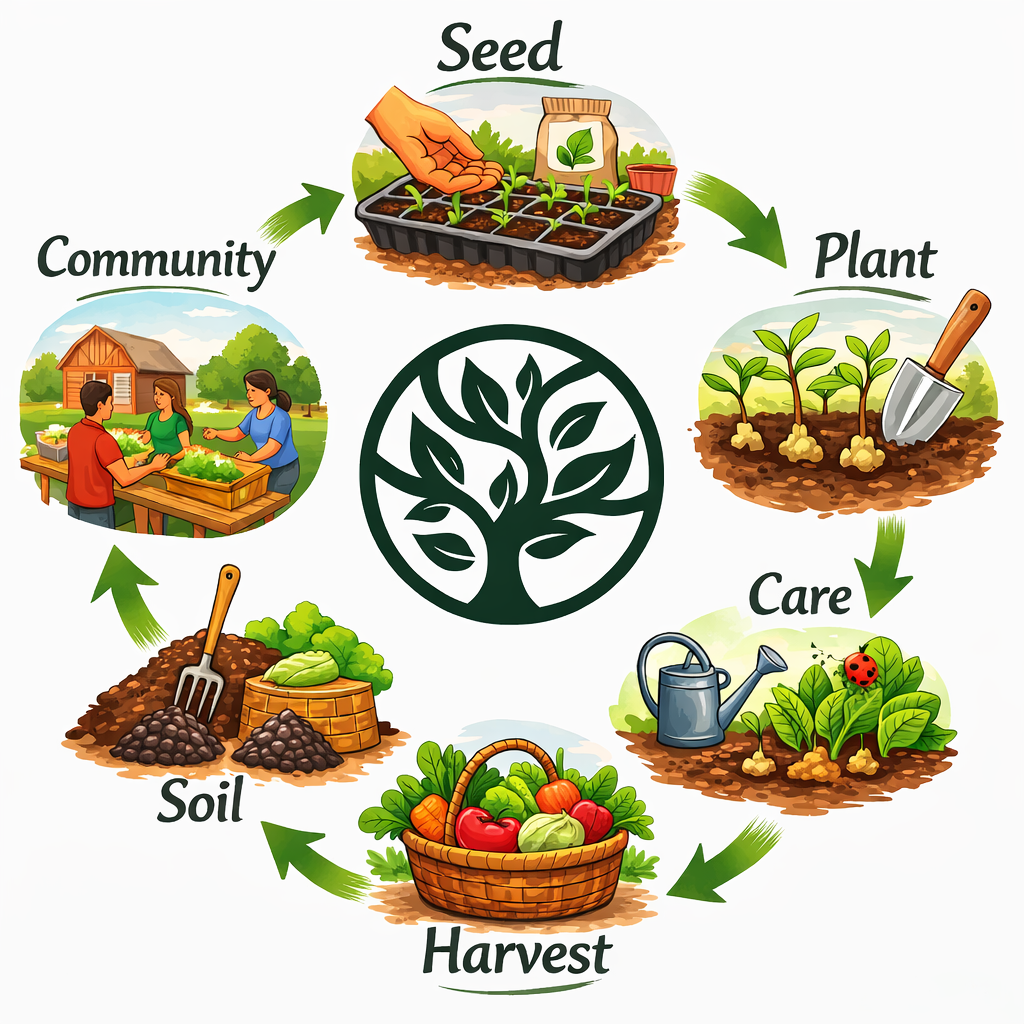
The fellowship is structured around the natural cycle of food production. Students participate directly in every stage of this cycle while working on a functioning ecological farm.
Why Regenerative Farming Matters
Modern agriculture has often focused on maximising short-term production, sometimes at the expense of soil health and ecological balance. Regenerative farming takes a different approach.
Key principles include:
- Recognising soil as a living ecosystem
- Building soil carbon and organic matter
- Supporting biodiversity and ecological balance
- Strengthening local food systems
- Producing healthy food while restoring land
Through this fellowship students gain experience in farming systems designed to improve soil health and long-term sustainability.
Carbon Negative Farming
Middle World Farms aims to demonstrate how small farms can actively contribute to climate stability.
Practices used on the farm include:
- Compost production
- Biochar production
- Soil organic matter building
- Biological soil management
By increasing soil carbon and supporting microbial life, regenerative farms can potentially remove carbon from the atmosphere while producing food.
Knowledge, Skills and Behaviours (KSB Framework)
The fellowship develops knowledge, practical skills and professional behaviours aligned with land-based vocational education.
📚 Knowledge
- Soil biology and living soil systems
- Plant life cycles and crop development
- Seed propagation and nursery management
- Biodiversity and ecological pest balance
- Soil carbon and regenerative agriculture
- Local food systems and community-supported farming
🛠 Skills
- Seed sowing and propagation
- Transplanting and direct seeding
- Crop observation and plant health monitoring
- Harvesting and produce handling
- Compost and soil building systems
- Preparing vegetables for local distribution
🌱 Behaviours
- Responsibility for living systems
- Careful observation of plant health
- Teamwork within a working farm environment
- Respect for ecological processes
- Communication with customers and community members
Transferable Skills Developed
Students participating in the fellowship develop a range of transferable skills valuable across many careers:
These skills support career readiness and align with the employability skills emphasised in modern work-experience frameworks.
Student Learning Outcomes
Students completing the programme will be able to:
- Understand soil as a living ecosystem
- Propagate crops using module trays and seed systems
- Establish crops through transplanting and direct seeding
- Observe and manage plant health and biodiversity
- Harvest and handle fresh produce
- Understand local food systems and community agriculture
Fellowship Structure
The Middle World Regenerative Farming Fellowship can host multiple students each year through short-term placements or longer industry training periods.
Students may attend the farm through:
- One day per week placements
- Block placements
- 12-week fellowship cycles
This allows students to gain practical experience while contributing to a functioning regenerative farm system.
Eligibility
The fellowship is suitable for:
- College or sixth-form students studying land-based subjects
- Students exploring careers in farming, horticulture or environmental fields
- Gap-year learners interested in ecological agriculture
- Young people seeking practical experience in regenerative food systems
No prior farming experience is required. Curiosity, willingness to learn and an interest in working with nature are the most important qualities.
Weekly Training Structure
The fellowship follows the natural rhythm of a working market garden.
12-Week Learning Pathway
The fellowship may follow a structured 12-week learning cycle.
Learning Philosophy
Training at Middle World Farms emphasises:
- Learning through practical experience
- Observing natural systems
- Understanding soil as a living ecosystem
- Building resilient local food systems
Students participate directly in the operation of a working regenerative farm, gaining both practical skills and ecological understanding.
Reflection and Feedback
Learning is supported through regular reflection and feedback. Students are encouraged to discuss what they have learned during their time on the farm and ask questions about the work they have undertaken.
Informal feedback is provided by the farm team on participation, teamwork and practical skills. Reflection helps students understand how their experiences connect to future learning, training or careers in environmental and land-based sectors.
Health and Safety
All students receive a basic introduction to farm safety before participating in practical activities. Students are supervised while working on the farm and are guided on safe practices when using tools, handling produce and working in outdoor environments.
Safety awareness is an important part of learning to work responsibly in a real agricultural setting.
Middle World Farms
Growing food, soil and community together.